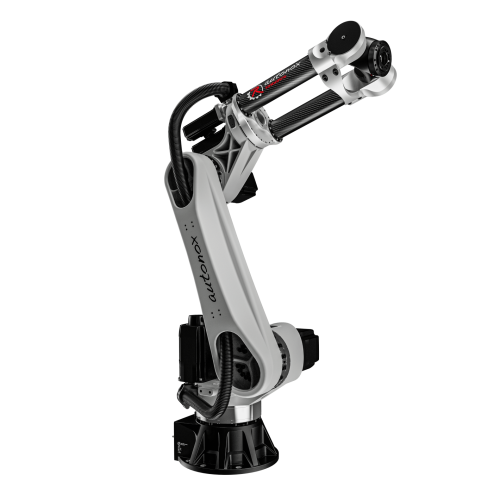
Welding Robots
Welding Robots
Introduction to Welding Robots
A welding robot is an automated system used in industry for precise and repeatable welding of components. Such robots are a key element of modern manufacturing processes, particularly in the automotive,machinery, and metalworking industries. Manufacturers of welding robots offer flexible solutions that help companies optimize their production processes, reduce costs, and ensure consistently high quality. Welding robots are ideal for enterprises focusing on automation, efficiency, and process improvement.
Working Principle of Welding Robots
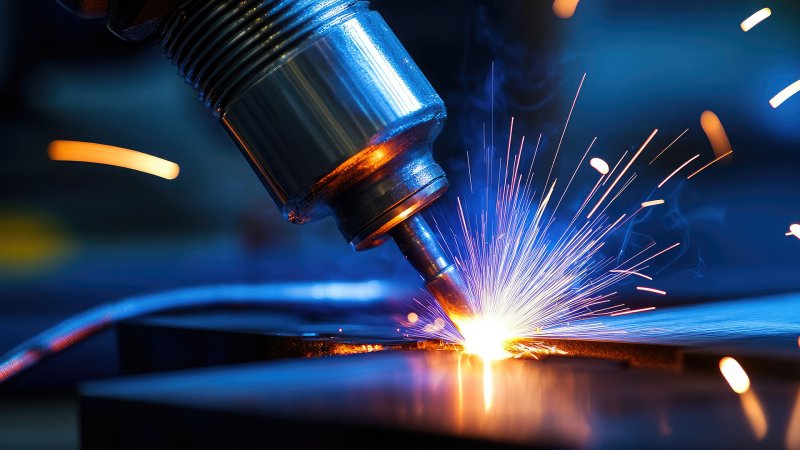
A welding robot is a highly precise system designed to perform automated welding processes such as arc welding or spot welding.
The foundation of the system is a multi-axis robotic mechanism capable of movements in several directions. Depending on the specific requirements of the joining task, different welding processes and corresponding equipment are used. Common methods include Metal Inert/Active Gas (MIG/MAG) welding, Tungsten Inert Gas (TIG) welding, laser beam welding, and resistance spot welding.
The selection of the appropriate welding process depends on material properties, geometric constraints, required seam quality, and process reliability.
The welding tools are modular in design and can be flexibly adapted to the robot mechanics via standardized interfaces (e.g., robot flange according to ISO 9409-1). This enables rapid changeovers between different welding processes, ensuring high flexibility and efficiency in automated manufacturing environments. The control of the welding robot is handled either through dedicated software solutions or external robot controllers. Leading manufacturers increasingly rely on digital, integrated control concepts that allow efficient programming, optimization, and re-use of welding programs. These systems support central management of welding parameters, simulation and offline programming, and seamless integration into existing production and quality assurance systems.
Typical Process Steps in Automated Welding
Positioning of the Workpiece
The component to be joined is precisely positioned in the fixture to ensure reproducible alignment for the welding process. Depending on the degree of automation of the production line, this can be done manually, semi-automatically, or fully automatically.
Programming the Welding Path
The welding path is defined either through online teach-in directly at the robot or via offline programming in a simulation environment. All relevant process parameters,such as welding speed, arc length, current, and seam trajectory are determined and optimized.
Automated Execution of the Welding Process
The robot autonomously performs the selected welding process according to the programmed sequence. Movements, welding parameters, and cycle times are executed to guarantee consistent weld quality.
Quality Assurance via Sensors and Machine Vision
Integrated sensors and camera-based systems monitor the welding process in real time. They record parameters such as seam position, temperature profile, or arc characteristics, enabling immediate process correction or subsequent quality evaluation.
Thanks to standardized and precisely coordinated process steps, robotic welding systems can operate continuously with high reproducibility. This ensures consistently high seam quality — both in large-scale production and in variant-rich or customized manufacturing orders.
Application Areas of Welding Robots
Welding robots are used today across numerous industrial sectors where precision, efficiency, and consistently high quality are essential.
In the automotive industry, they perform key tasks such as resistance spot welding of car body parts using advanced robotic welding guns.
In mechanical and plant engineering, welding robots are indispensable for the automated joining of large and complex components, where demanding welding processes and high seam quality are required. In general metalworking, they enable cost-effective and efficient series production of frames, beams, and various structural parts with different geometries. Even in the aerospace industry, welding robots play an important role, meeting the highest standards of precision and reliability.
Not only large corporations, but also small and medium-sized enterprises benefit from the advantages of this technology. Those looking to purchase a welding robot can find customized solutions from experienced welding robot manufacturers that meet both the technical requirements and the target budget.
Benefits of Using Welding Robots
The use of robotic welding systems offers a wide range of economic and production-related advantages for companies of all sizes. By automating welding processes, productivity and process stability can be significantly increased. As a result, weld quality can be maintained at a consistently high level. Modern welding robots are characterized by high precision, repeatability, and reliability, clearly outperforming manual processes in terms of seam consistency, process safety, and cycle time in series production.
Summary of Key Advantages:
- Consistent weld quality: Each weld is executed with uniform precision and under defined process parameters.
- Cost reduction: Minimization of rework and scrap through reproducible and stable welding processes.
- Workplace safety: Reduction of physical strain and exposure of employees by shifting hazardous tasks to automated systems.
- High flexibility: Adaptability to different workpiece geometries, materials, and welding methods thanks to modular system architecture.
- Process efficiency: Especially in serial production, short cycle times and high throughput rates lead to a significant increase in overall productivity.
Selection Criteria for the Use of Welding Robots in Industrial Manufacturing
The increasing automation of industrial production processes presents companies with a strategic decision: whether and to what extent robotic welding systems should be integrated into their manufacturing operations. Selecting the right welding robot is not an isolated investment decision but part of a comprehensive process optimization strategy that must consider both technical and economic factors.
Central criteria is the geometry of the component and the frequency of repetition of the welding tasks. Workpieces with standardized geometries and high production volumes are particularly well suited for automated welding, as they allow reproducible seam tracking and efficient programming. At the same time, the chosen welding process — whether MIG/MAG, TIG, laser, or spot welding — must be compatible with the materials used and the required quality standards.
Another key selection factor is quality assurance.Modern welding robots can be equipped with sensor and vision systems that monitor and document the welding process in real time. This enables continuous process control and ensures compliance with industry-specific standards and certification requirements.
The production volume plays a decisive role in evaluating the economic feasibility of a welding robot system.
In high-volume manufacturing, the focus is on maximum process efficiency: welding robots allow short cycle times, high throughput, and consistent seam quality.
Automation optimizes cycle times and significantly increases overall productivity. In such environments, the investment in a robotic welding system often pays off quick particulary when the production line is designed for large quantities and low product variation. In contrast, high-mix production environments such as special-purpose machinery or general metalworking require maximum system flexibility.
Modular robotic solutions with interchangeable welding tools, adaptable fixtures, and intelligent control systems enable rapid changeovers to different component geometries and welding processes.
The ability to create and simulate programs offline further reduces downtime and increases equipment availability.
Thus, the decision to implement a roboticwelding system must always be made in the context of the planned production volume and product variety. While cycle time optimization is the primary goal in highly automated mass production, adaptability and scalability are key success factors in flexible manufacturing environments.
For the efficient integration of welding robots into existing production systems, seamless connectivity to higher-level automation and IT infrastructures is essential. This includes integration with machine controls (e.g., PLCs), Manufacturing Execution Systems (MES), and Enterprise Resource Planning (ERP) platforms. Integration into automated production cells and linked manufacturing lines is also critical for scalability and overall equipment effectiveness (OEE).
An innovative approach to simplifying this integration is the use of controller-independent robotic systems, also referred to as open robotics. These systems are characterized by their ability to be directly integrated into existing machine and process controls without requiring proprietary robot controllers. By using standardized communication protocols such as OPC UA, Profinet, or EtherCAT, they enable end-to-end data and control transparency across all levels of the automation pyramid.
Open robotics solutions therefore offer high interoperability with existing system components while reducing integration effort and complexity in retrofit projects or expansions. They make a significant contribution to increasing the flexibility and future viability of production infrastructures and enable cost-efficient implementation of modern Industry 4.0 concepts.
Maintenance and Servicing of Welding Robots
Regular maintenance is essential to ensure the longevity and reliability of a welding robot.
As part of preventive maintenance, mechanical components such as gear units, axes, and welding guns are systematically inspected, cleaned, lubricated, and replaced if necessary.
Electrical assemblies, control units, and all cable and connector systems are also subject to periodic inspection to identify potential failure risks at an early stage and avoid unplanned downtime.Special attention is given to the maintenance of torch and nozzle components, as wear, deposits, or contamination can significantly affect weld quality.
Leading manufacturers offer automated cleaning and calibration systems integrated directly into the production process, ensuring consistently high process quality.
A consistent and well-documented maintenance strategy not only minimizes downtime and maintenance costs but also sustainably improves overall equipment effectiveness (OEE) and the return on investment (ROI) of welding robot systems.
autonox Robotics Mechanics for Welding Applications
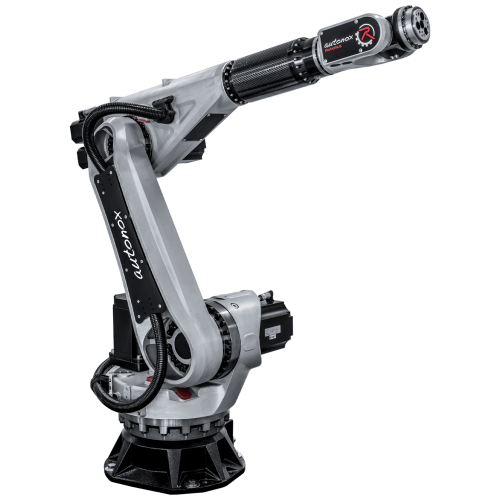
The robot mechanics from autonox Robotics are characterized by robust construction, high precision, and an open structural design, making them ideally suited for demanding welding processes.
Thanks to their rigid kinematics and high repeatability, they meet the fundamental requirements for accurate positioning and path control — both critical for achieving superior weld quality.
Furthermore, standardized interfaces and compatibility with common welding tools and peripherals enable flexible integration into automated welding cells.The mechanics are designed for continuous industrial operation, offering high load capacity and ease of maintenance — both crucial factors for reliable and cost-efficient performance in welding applications.
Due to the open system architecture of autonox Robotics mechanics with a clearly defined mechanical interface, they can be easily integrated into existing machine and process control systems, enabling seamless connectivity within modern production environments. As a result, autonox Robotics mechanics provide a future-proof and high-performance foundation for a wide variety of welding processes — from series production to high-mix manufacturing tasks.
Through the autonox Finder, detailed technical data, configuration options, and datasheets are available for all parallel kinematics and serial robot mechanics. Companies can use the platform to identify which welding robot mechanics best meet their specific requirements and how these can be combined with common control platforms.