
CNC Robots
CNC Robots
Introduction to CNC Robots
A CNC robot combines the flexibility of industrial robotics with the capabilities of CNC machining. By integrating a robot into machining applications, manufacturers can automate production processes, increase efficiency, and expand the capabilities of conventional machine tools. Particularly for complex machining tasks, CNC robot automation provides an economical alternative and/or valuable extension to traditional CNC machining centers.
Compared to conventional CNC machines, a robot CNC machine offers greater freedom of movement and a significantly larger working envelope. This allows multiple machining operations to be performed within a single setup, reducing setup times while increasing process flexibility. As a result, manufacturers can machine large or complex workpieces more efficiently and respond more quickly to changing production requirements.
Modern CNC robots support both production automation and the digitalization of manufacturing processes. Thanks to their flexibility, they can be integrated into existing production environments and combined with machine tools, measuring systems, and other automation components.
As manufacturing continues to evolve, more companies are using robot CNC solutions to automate CNC machining operations, improve productivity, and increase the utilization of existing production resources.
Types of CNC Robots
Different CNC robots are designed to meet specific machining requirements. The most suitable solution depends on factors such as the workpiece size, machining process, required accuracy, and production volume.
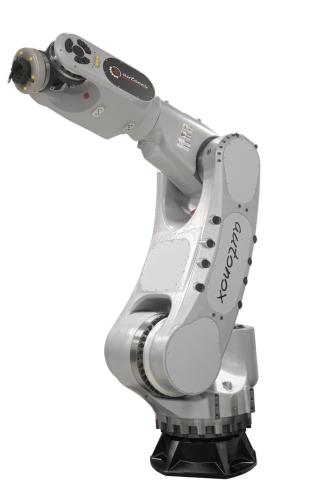
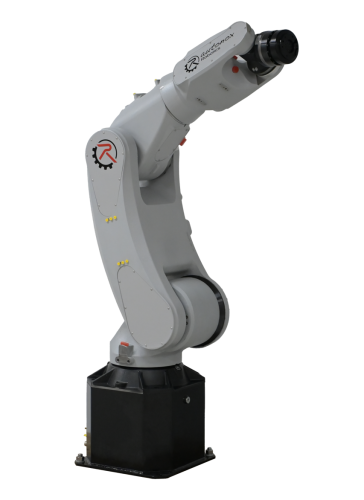
Serial articulated robots are widely used in robotic CNC machining because they offer a large working envelope and high kinematic flexibility. Unlike conventional CNC machine tools, a robot arm CNC system can approach a workpiece from multiple directions, making it easier to machine complex geometries and large components.
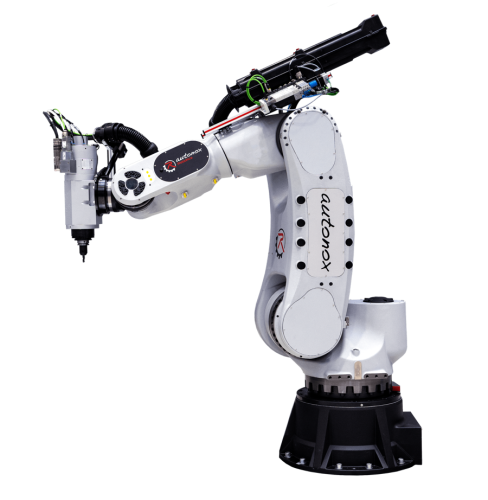
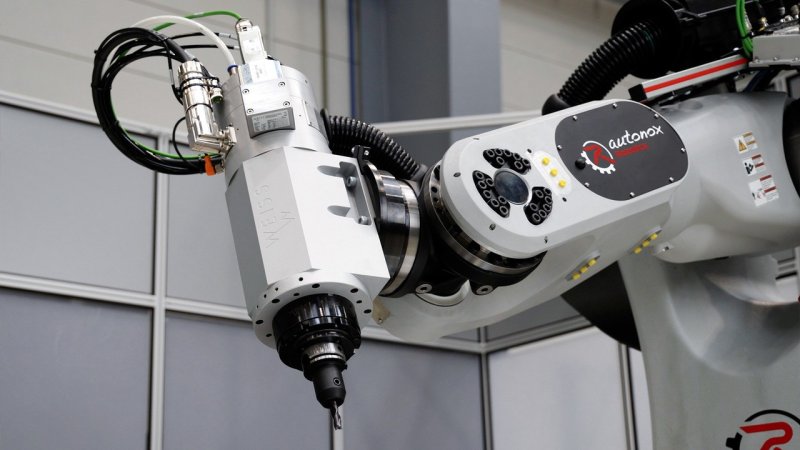
Depending on the application, robot mechanics can be equipped with different machining spindles, protected media routing, secondary encoders, and specialized sealing solutions for demanding industrial environments. These options improve rigidity, repeatability, and process reliability while supporting a wide range of machining operations.
Modern CNC machine robot arm solutions can also be integrated into automated production cells together with handling systems, measuring equipment, and digital process monitoring. This enables manufacturers to combine machining, material handling, and quality control within a single production environment while increasing overall process efficiency.
Advantages of Using CNC Robots
The use of CNC robots offers manufacturers numerous advantages over conventional machining solutions. Their large working envelope, high flexibility, and ability to perform multiple operations within a single setup make them a valuable addition to modern production environments.
One of the main advantages of robotic CNC machining is the ability to machine large or complex workpieces that exceed the limitations of traditional CNC machine tools. A robot CNC machine can access the workpiece from different angles, reducing repositioning and simplifying the machining of complex geometries.
Another important benefit is flexibility. While conventional CNC machines are typically designed for dedicated tasks, CNC automation robots can be adapted to changing production requirements with relatively little effort. By changing the machining program or tooling, the same robot system can be used for different components and manufacturing processes.
Modern CNC manufacturing robotics also support the integration of machining, material handling, and quality inspection within a single automated production cell. Combined with open control architectures, manufacturers can seamlessly integrate robot mechanics into existing production lines and Industry 4.0 environments.
In addition, CNC machine tending robots automate the loading and unloading of machine tools, reducing manual handling and increasing machine utilization. This not only improves productivity but also enables consistent production quality and more efficient use of available resources.
Applications of CNC Robots
Today, CNC robots are used in a wide range of industries where flexible and efficient machining is required. Their flexibility allows manufacturers to automate machining processes while maintaining a high degree of adaptability to different workpieces and production requirements.
Typical applications include milling, drilling, trimming, deburring, grinding, polishing, and cutting operations. A robotic CNC machine can perform these processes on components made of metal, plastics, composite materials, wood, or lightweight materials, making robotic machining suitable for many industrial sectors.
In the automotive and aerospace industries, robot CNC systems are used to machine large structural components and complex geometries that would be difficult or costly to process using conventional machine tools. In tool and mold making, robot mechanics support flexible machining processes while reducing setup times and increasing production efficiency.
Besides machining applications, CNC machine tending robots play an important role in automated manufacturing. A CNC machine tending robot loads and unloads machine tools, transfers workpieces between production steps, and supports continuous manufacturing with minimal manual intervention. This improves machine utilization, reduces cycle times, and helps ensure consistent production quality.
By combining machining, handling, and inspection within a single production cell, automation, CNC machines and robotics enable highly efficient manufacturing concepts. These integrated solutions support flexible production, simplify process automation, and provide manufacturers with greater scalability for future production requirements.
How to Choose the Right CNC Robot
Selecting the right CNC robot depends on the machining task, workpiece characteristics, and production requirements. While payload and reach are important criteria, manufacturers should also consider factors such as rigidity, repeatability, machining forces, spindle integration, and the overall system concept.
The required machining process plays a key role in the selection. Applications involving milling, drilling, or grinding place different demands on the robot mechanics than handling or machine tending tasks. For demanding machining operations, high structural stiffness and effective vibration damping contribute to stable processes and consistent machining quality.
Another important consideration is the level of integration. A modern CNC machine robot arm should be compatible with existing production equipment and support communication with machine tools, measuring systems, and higher-level automation software. Controller-independent robot mechanics provide greater flexibility when integrating the system into new or existing production environments.
Manufacturers should also consider future production requirements. A robot arm CNC solution that can be expanded with additional equipment, such as secondary encoders, protected media routing, or application-specific spindle systems, offers greater long-term flexibility and protects the investment as manufacturing needs evolve.
For applications requiring precision CNC machining for robotics, the overall system is just as important as the robot itself. Process optimization, tool selection, calibration, workpiece fixturing, and programming all influence the achievable machining quality. Considering these factors during the planning phase helps ensure reliable operation and consistent production results.
Maintenance and Troubleshooting Tips
Regular maintenance is essential to ensure the long-term performance and reliability of CNC robots. Preventive maintenance helps minimize unplanned downtime, maintain machining accuracy, and extend the service life of both the robot mechanics and the machining spindle.
Routine inspections should include checking bearings, drive systems, cable routing, lubrication points, spindle interfaces, and protective components. For demanding machining applications, regular calibration and verification of repeatability also contribute to stable processes and consistent machining quality.
Modern Machine controles into which CNC robotics systems can be directly integrated provide diagnostic functions that continuously monitor operating conditions and detect potential issues at an early stage. This enables predictive maintenance strategies, allowing service work to be scheduled before failures affect production.
If machining quality changes or unexpected process deviations occur, troubleshooting should include both the mechanical system and the machining process. Tool wear, spindle condition, robot calibration, workpiece fixturing, and program parameters can all influence the final machining result. A systematic analysis helps identify the root cause and restore stable production efficiently.
Future Trends in CNC Robots
The demand for flexible manufacturing continues to drive the development of CNC robots. Manufacturers increasingly require automation solutions that can adapt quickly to changing production volumes, new product variants, and shorter product life cycles.
One important trend is the closer integration of robotic CNC machining with digital manufacturing technologies. Robot mechanics are becoming part of connected production environments where machine data, process monitoring, and quality control are integrated into a single digital workflow. This improves process transparency and supports data-driven production optimization.
Artificial intelligence and advanced software tools are also influencing CNC robot automation. Intelligent programming, simulation, and offline path optimization help reduce engineering effort while improving machining performance and process reliability.
Another key development is the increasing use of controller-independent robot mechanics. Open system architectures provide manufacturers with greater flexibility when selecting control systems, software platforms, and automation components. This simplifies the integration of CNC automation robots into both new production lines and existing manufacturing environments.
As machining applications continue to evolve, CNC manufacturing robotics will play an increasingly important role in enabling efficient, scalable, and future-ready production concepts across a wide range of industries.
CNC Robotics by autonox Robotics
autonox Robotics develops robot mechanics for demanding CNC machining applications. Designed for industrial environments, the portfolio combines high rigidity, repeatability, and dynamic performance to support reliable machining processes. The robot mechanics are suitable for a wide range of applications, including milling, drilling, grinding, polishing, deburring, trimming, and other CNC machining operations.
To meet different application requirements, the robot mechanics are available with various kinematic concepts, payload classes, and working areas. Depending on the machining task, they can be equipped with features such as secondary encoders, protected media routing, and sealing against dust and liquids. These options help ensure stable machining processes and reliable operation, even in challenging production environments.
A key advantage of autonox robot mechanics is their controller-independent design. Thanks to the open system architecture, the mechanics can be integrated with a wide range of industrial control systems and software solutions. This gives machine builders and system integrators the flexibility to implement customized CNC robot automation concepts while integrating the robot mechanics into existing production lines.
The autonox Finder provides detailed technical information, CAD data, and configuration options for the complete portfolio of robot mechanics, making it easier to identify the right solution for each application. In addition, the autonox Robotics YouTube channel features more than 11 videos demonstrating robot mechanics in real CNC machining applications and showcasing practical automation concepts for different industries.