
Palletizing robot
Palletizing robot
Introduction to palletizing robots
Palletizing robots have become a central component of modern, highly automated production processes in recent years. In industrial environments where manual operations are still common, palletizers take over the structured and stable stacking of goods onto pallets. Especially in companies with high product variety and dynamic line conditions, control-independent robot solutions are gaining increasing importance.
autonox Robotics represents a technological shift: moving away from monolithic, closed systems toward modular, open, and scalable robot mechanics that integrate seamlessly into any control environment. The introduction of such flexible palletizing robots — whether classic articulated robots or highly dynamic parallel kinematics systems — enables companies to manage production peaks, format changes, and rising quality requirements with confidence.
At the same time, demand is growing for palletizer manufacturers that provide not only hardware but also consistent system interfaces, transparent documentation, and globally available mechanical platforms.
Overview of palletizing robots
Palletizing robots are a key component of modern industrial automation, designed to automatically stack products onto pallets in a structured and repeatable way. A palletizer replaces manual palletizing tasks and ensures consistent pallet quality, even in high-throughput production environments. As line dynamics increase and manual labor becomes scarce, automated palletizer solutions are becoming essential for scalable manufacturing and logistics.
A modern automatic palletizer machine integrates mechanical robustness, intelligent software, and flexible control concepts. These systems can handle cartons, crates, bags, or containers and are easily integrated into existing production lines. Today’s palletizing systems are often closed systems, whichlimits integration flexibility and increase long-term dependency. Control-independent solutions make the difference allowing palletizing processes to run entirely within the customer’s PLC environment.
Technical criteria for selecting a palletizing robot
The selection of a suitable palletizing robot requires a structured technical evaluation of system parameters. Key criteria include payload capacity, working range, cycle time, positioning accuracy, product variability, and compatibility with the existing control architecture. A properly specified palletizer machine must match both current throughput requirements and future scalability targets within the automation environment.
Control architecture plays a decisive role in system design. Open and control-independent solutions allow direct integration into PLC environments without additional proprietary robot controllers. This simplifies commissioning, reduces system complexity, and improves long-term maintainability of palletizing systems.
The gripper configuration is a critical engineering parameter. Depending on product characteristics, vacuum systems, multi-clamp grippers, or driven mechanical tools may be required. For applications with varying infeed conditions, the integration of industrial vision systems enables dynamic product position detection and adaptive handling strategies.
Evaluation of the palletizer machine price should be based on total lifecycle costs rather than initial investment alone. Service accessibility, spare part availability, documentation standards, mechanical durability, and interface transparency directly influence long-term operational efficiency.
As a robotic palletizer manufacturer, autonox Robotics provides control-independent mechanical platforms based on open and standardized interfaces. This architecture enables layout expansion or system integration without modifying the core automation structure, ensuring long-term technical flexibility and investment security.
Benefits of palletizing robots
The main advantage of using a palletizing robot is improved efficiency and process reliability. Automated palletizing increases throughput, reduces cycle times, and ensures better traceable pallet patterns optimized for transport and storage. At the same time, robotic palletizing eliminates physically demanding manual work and improves workplace safety.
From a business perspective, a robotic palletizer reduces operational costs by minimizing errors, product damage, and unplanned downtime. While the palletizer machine price varies depending on payload, reach, and kinematic design, automated solutions typically achieve a fast return on investment. Companies investing in a top tier palletizer focus on total cost of ownership, long-term availability, and ease of maintenance rather than initial cost alone.
Types of palletizing robots
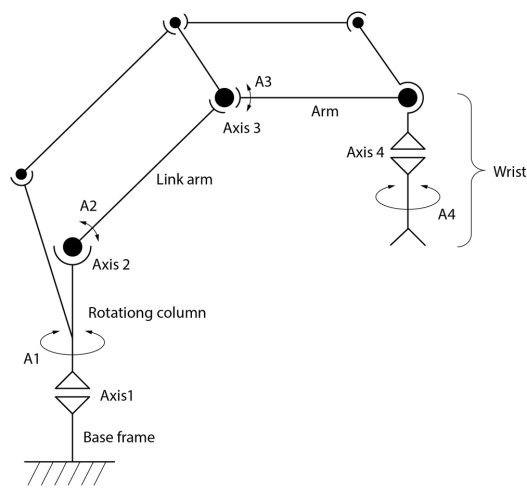
There are several types of palletizing robots, each suited to specific application requirements. Gantry-based systems are commonly used for large workspaces and heavy loads, offering stable and predictable motion. Articulated robots provide high flexibility and are often applied where complex pallet patterns or mixed products are required.
For small goods and high-speed applications, sSCARA and parallel kinematics designs are frequently used. These palletizer machine types enable short cycle times and high repeatability, making them ideal for demanding packaging lines. Specialized systems are also available for handling flexible or heavy products such as bags, sacks, or bulk materials.
Modern palletizing solutions often combine robotic hardware with vision systems, adaptive grippers, and pallet pattern software. This allows dynamic product handling and fast adaptation to changing production conditions.
Choosing the right palletizing robots
Selecting the right palletizer manufacturers involves more than simply choosing hardware. A reliable robotic palletizer manufacturer should provide open system interfaces, standardized documentation, long-term component availability, and global technical support. These factors directly influence integration effort, commissioning time, and long-term operational stability.
When evaluating a palletizing robot, companies should assess payload capacity, reach, cycle time performance, positioning accuracy, and compatibility with the existing PLC or automation architecture. A well-designed palletizer machine must not only meet current production targets but also allow future scalability without structural modifications to the system layout.
System flexibility and maintainability are critical selection criteria. Open and scalable palletizing systems enable seamless integration into existing production environments while avoiding dependency on proprietary robot controllers. This approach improves transparency, simplifies troubleshooting, and reduces lifecycle costs.
In addition, the total cost of ownership should be considered alongside the palletizer machine price. Maintenance accessibility, spare part logistics, software compatibility, and service support often have a greater long-term impact than the initial investment. Companies increasingly prefer scalable palletizing solutions that protect existing automation infrastructure while enhancing performance and throughput.
Palletizing robots by autonox Robotics
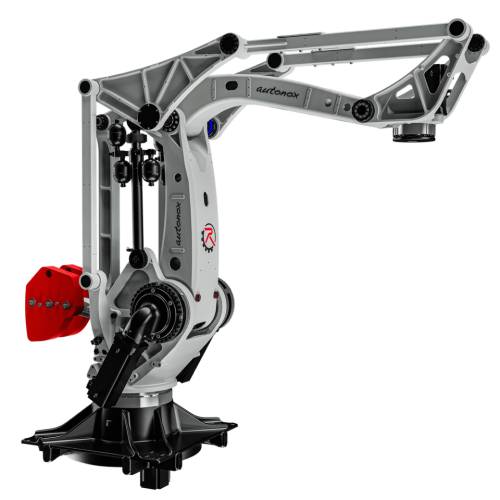
autonox Robotics develops and suppliescontrol-independent palletizing robot mechanics engineered for high performance, precision, and reliability. These autonox mechanics integrate seamlessly into a wide range of industrial automation environments.
Whether used as a standalone palletizer machine or as part of complex palletizing solutions, autonox palletizing robots mechanics support efficient, future-proof production concepts. With robust design, optimized kinematics, and flexible integration, they represent a powerful foundation for advanced automated palletizing.